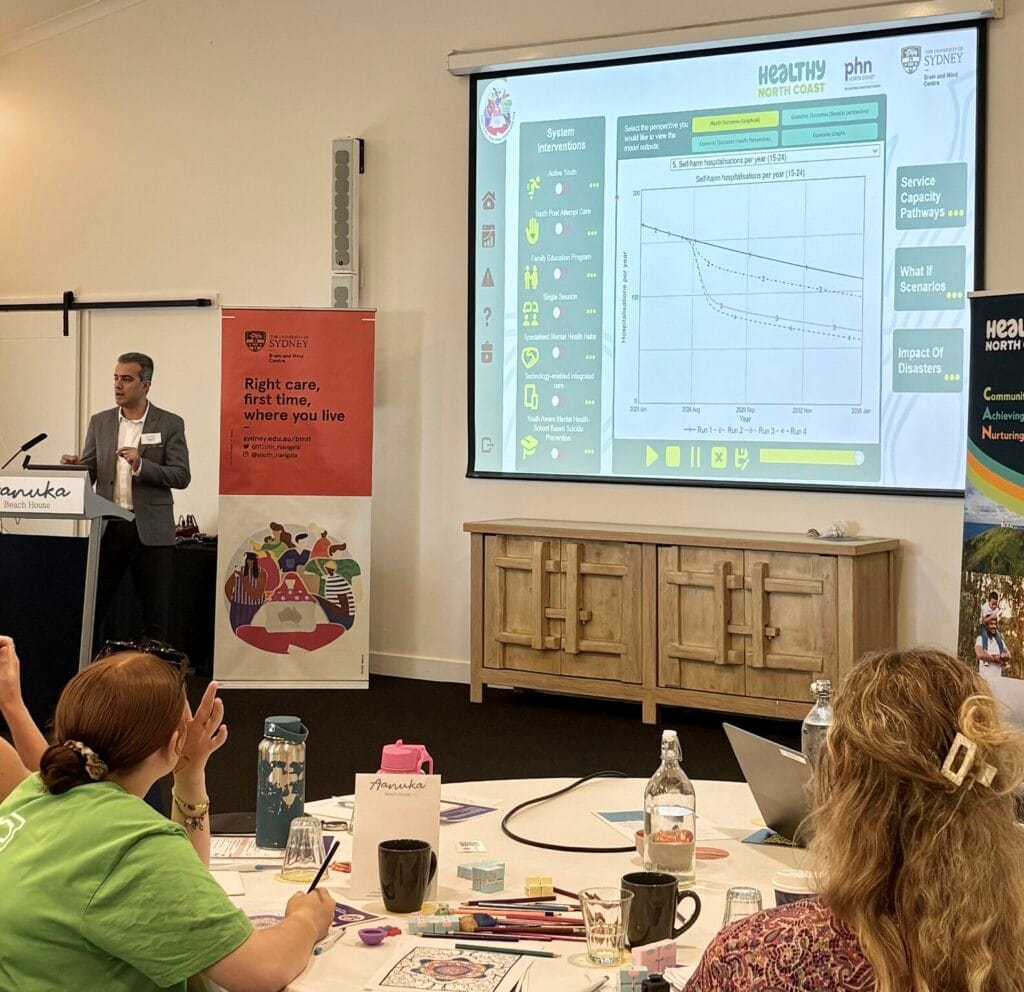
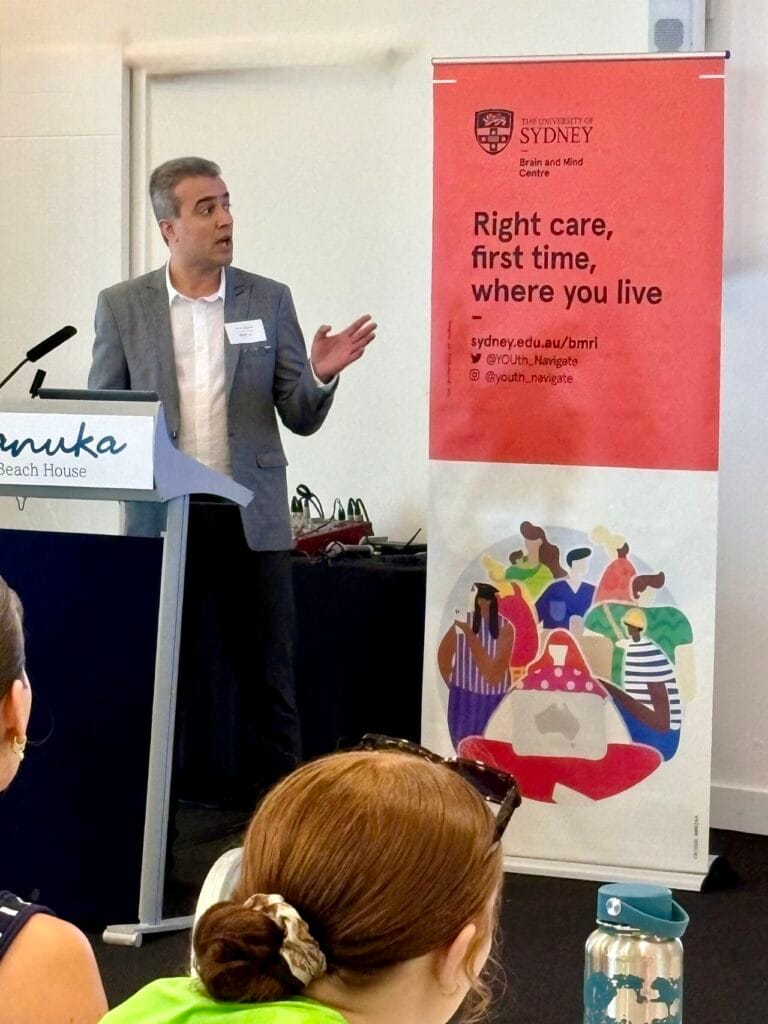
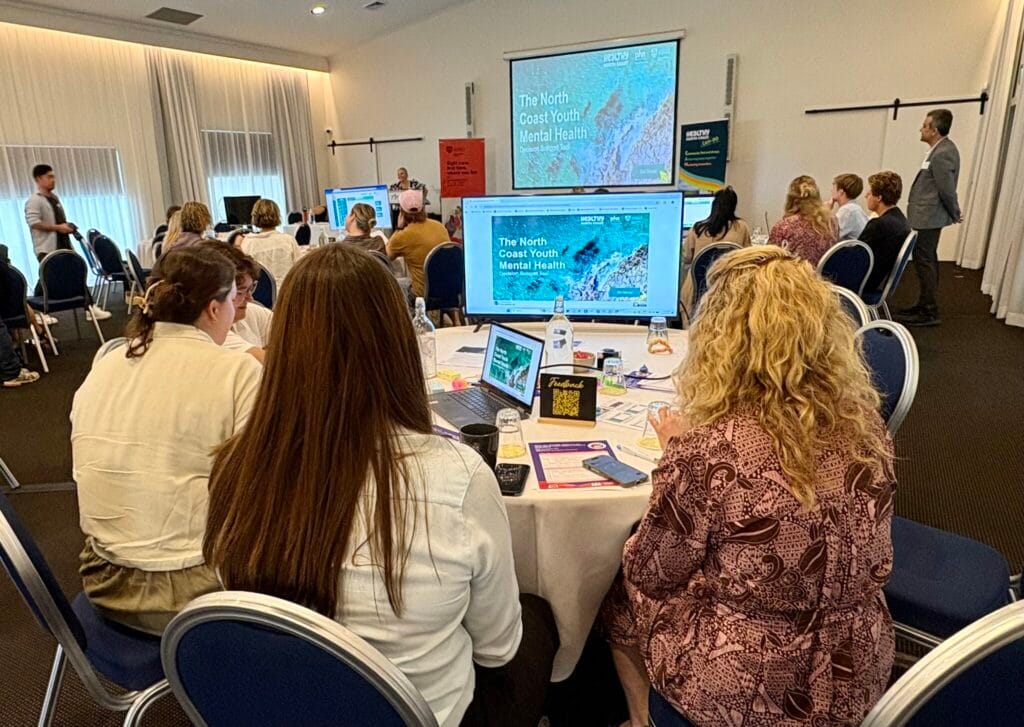
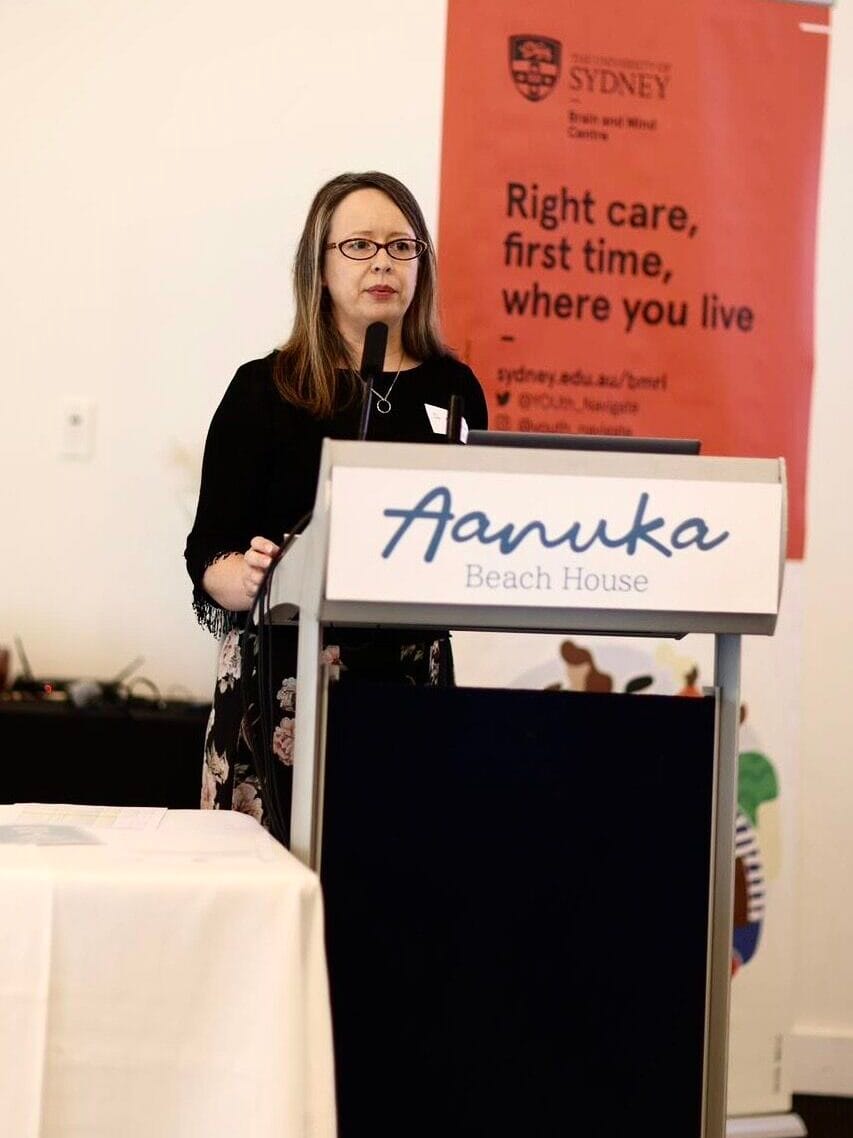
Yesterday, I had the opportunity to join North Coast community stakeholders and young people for the final North Coast participatory system dynamics modelling workshop of our project (Right care, first time, where you live). It was a powerful demonstration of what can happen when a community comes together with a shared commitment to improving youth mental health.
Over the course of the project, our Systems Modelling & Simulation team at the Brain and Mind Centre has worked closely with local service providers, educators, clinicians, commissioners, and—most importantly—young people with lived experience. Together, we have co-designed one of the most sophisticated regional youth mental health system dynamics models in Australia.
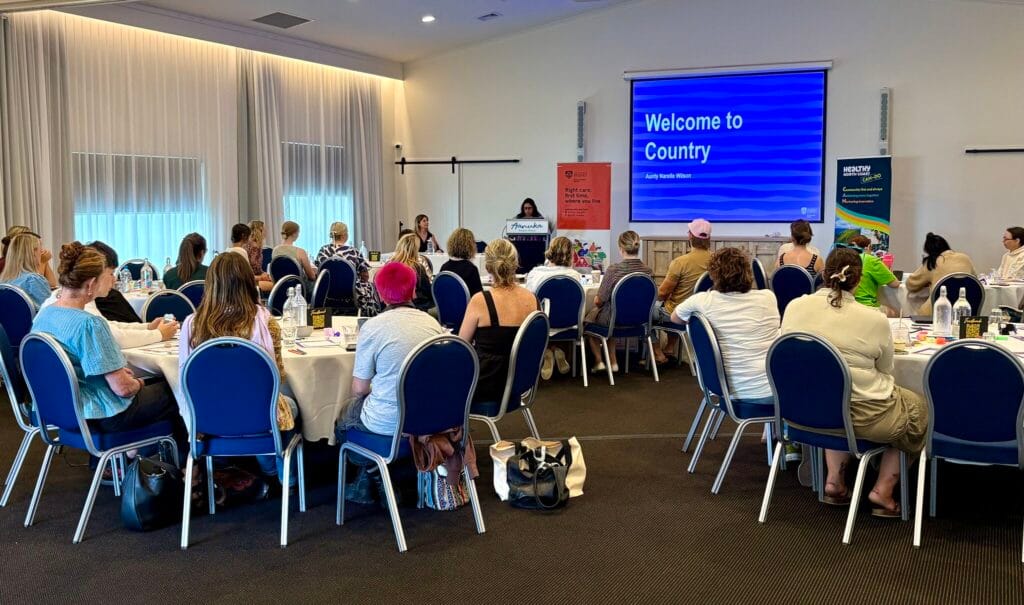
What stood out in this workshop
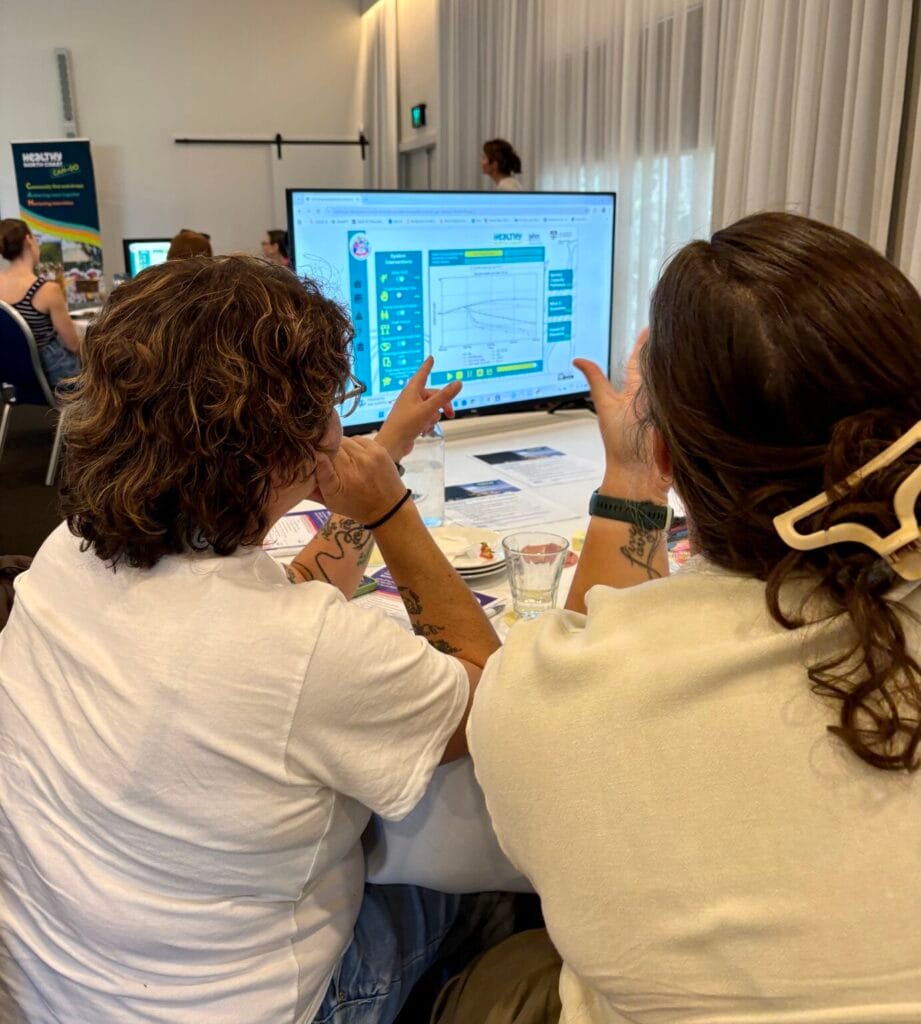
One of the most rewarding aspects of the session was watching how confidently participants used the model during the hands-on-keyboard activity. Even after the structured session ended, several young people continued exploring scenarios on their own—testing hypotheses, comparing strategies, and examining what might help build resilience across the system. Their engagement was a clear reminder that young people are not just participants; they are partners in shaping solutions.
I also spoke with service providers and regional decision-makers who were eager to use the model to support their planning and policy questions. We discussed everything from modelling the impacts of natural disasters on service demand to testing workforce strategies and early intervention initiatives. These conversations reinforced the value of system dynamics as a way to think more holistically and strategically about complex challenges.
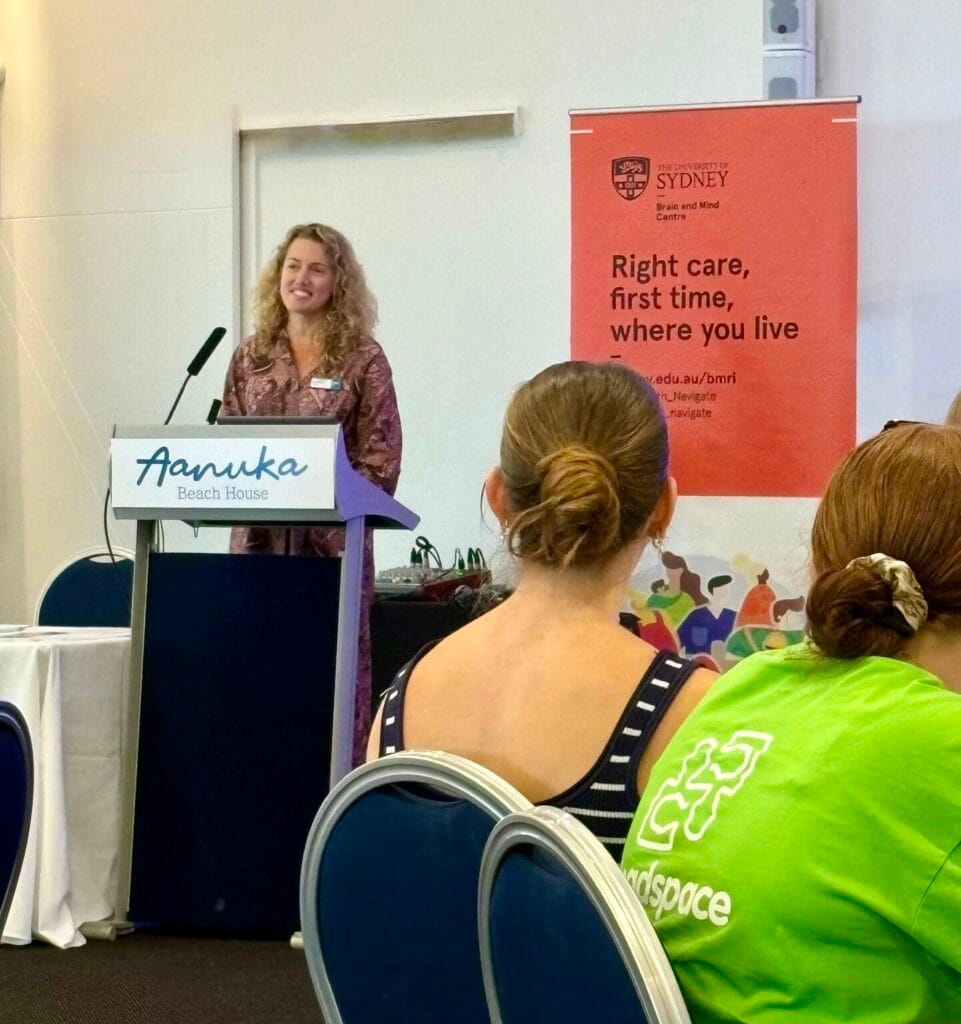
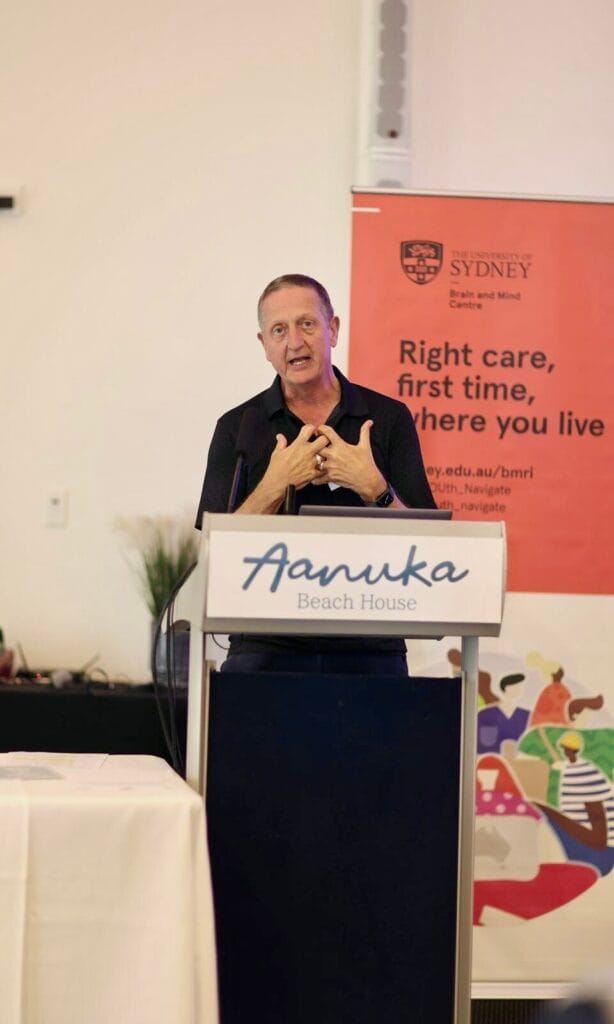
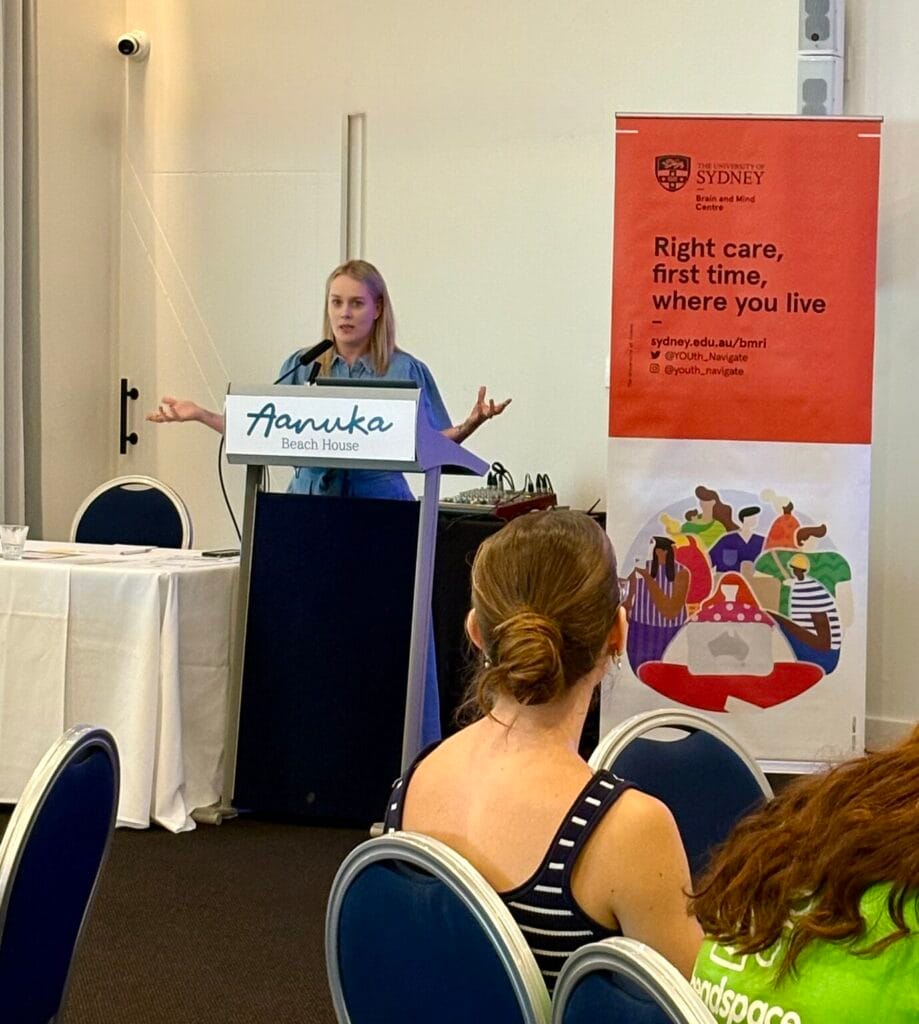
Co-creation makes the model stronger
I was grateful for the detailed feedback participants shared about the model’s interface and usability. These insights will help us refine the platform to ensure it remains intuitive, accessible, and genuinely useful for those who will rely on it in their work.
This workshop marked the culmination of months of collaborative effort, but the real value of this work lies in how the model is now used—by the community, for the community—to inform decisions, build capacity, and support coordinated action.
Looking forward
I am proud to contribute to this important initiative and excited to continue supporting Healthy North Coast as we move into the next phase. With a strong community, an evidence-based decision-support tool, and a shared commitment to young people’s wellbeing, I am confident we can create a more resilient and responsive youth mental health system for the region.

Let’s learn Systems Modelling together!
I share useful information about Systems Modelling here weekly.