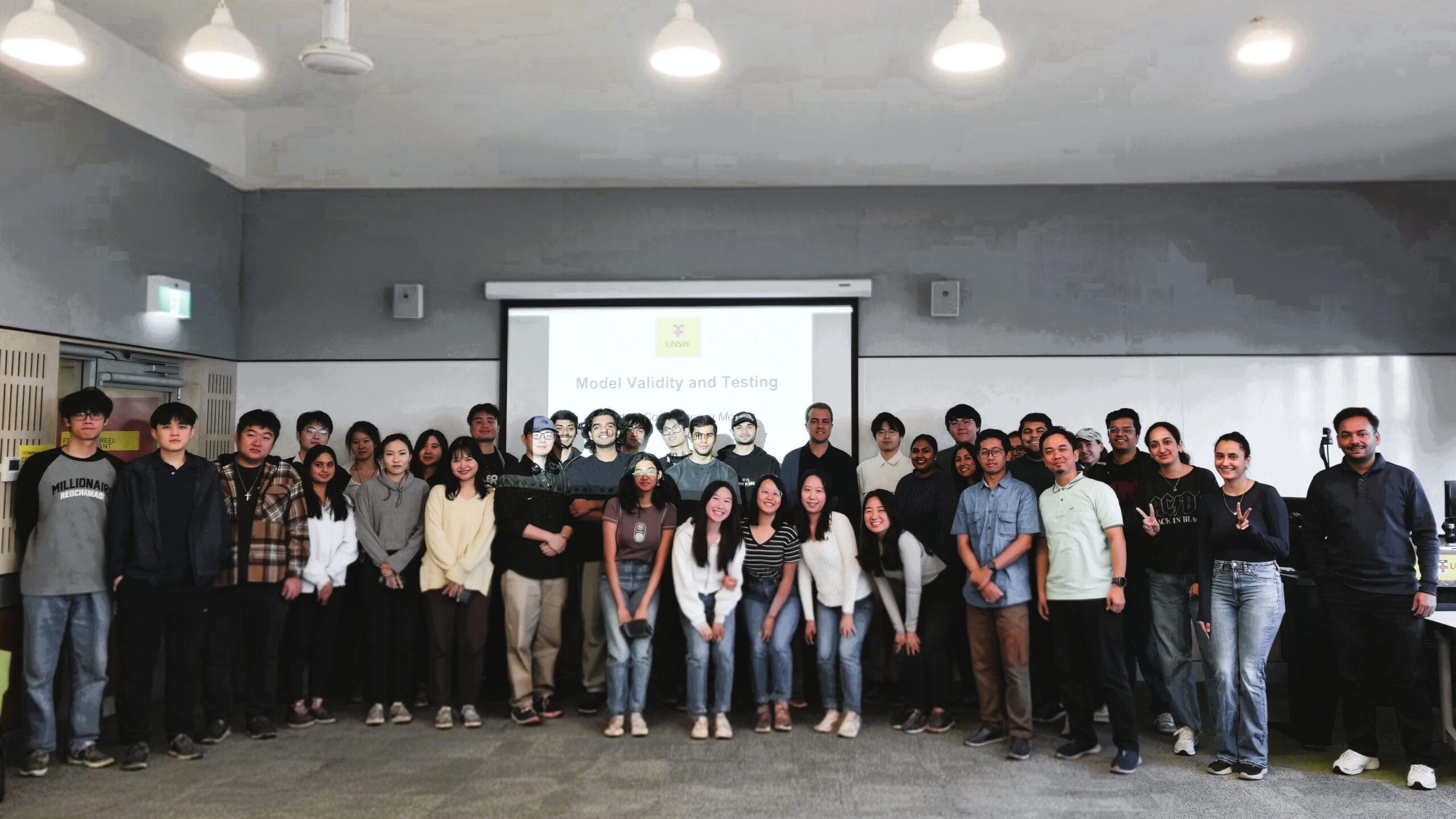
The final lecture of Systems Thinking & Business Dynamics at UNSW Business School marks the end of a particularly rewarding and experimental term.
This year, I set out to embed AI into how students learn systems thinking and system dynamics modelling. The aim was not simply to introduce new tools, but to rethink how learning happens when AI becomes part of the cognitive process.
AI as a Thinking Partner, Not a Shortcut
A key design principle for the course was to position AI not as a shortcut to answers, but as a thinking partner and learning facilitator.
Students engaged with AI to:
- Challenge and refine their causal loop diagrams and stock-flow diagrams
- Explore alternative model structures
- Test assumptions embedded in their system representations
This shifted the focus away from getting the right answer toward better questions and stronger reasoning that results in more effective learning.
Reflecting on How AI Shapes Thinking
An important component of the course was asking students to reflect on how they used AI in developing and improving their causal loop diagrams (CLDs) and stock-and-flow diagrams (SFDs), and what that meant for their learning journey.
This reflection highlighted that AI actively shapes how we think, model, and interpret systems. For many students, this led to a deeper awareness that the quality of modelling depends not just on the tool, but on how thoughtfully it is used.
Critical thinking remains central! even more so in AI-augmented environments
Systems Thinking Meets AI
Systems thinking is fundamentally about understanding complexity, feedback, and interdependencies. Integrating AI made these elements more visible and, in some cases, more challenging.
Students did not just build models—they engaged in a more reflective process of:
- Evaluating the quality of their thinking
- Questioning the boundaries and assumptions of their models
- Understanding how tools influence reasoning
In this sense, AI did not replace systems thinking; it made its importance more explicit.
Looking Ahead
This term reinforced a key insight: The intersection of system dynamics education and AI presents a powerful opportunity—but only if approached thoughtfully.
The next step is to refine this integration further, with a continued focus on:
- Strengthening critical thinking
- Designing AI-integrated learning experiences
- Maintaining the balance between human judgment and technological support
There is still much to explore, but the potential is significant.
A special thank you to the students for their curiosity, openness, and engagement throughout the term. I’m also grateful to Professor Shayne Gary for the support, collaboration, and guidance in shaping and delivering this experience.

Let’s learn Systems Modelling together!
I share useful information about Systems Modelling here weekly.